Casino Bạc Liêu in Fiction and Public Imagination
Casino Bạc Liêu in fiction can shape a public image through repeated scenes and references; learn how to trace that image without mistaking fiction for history.
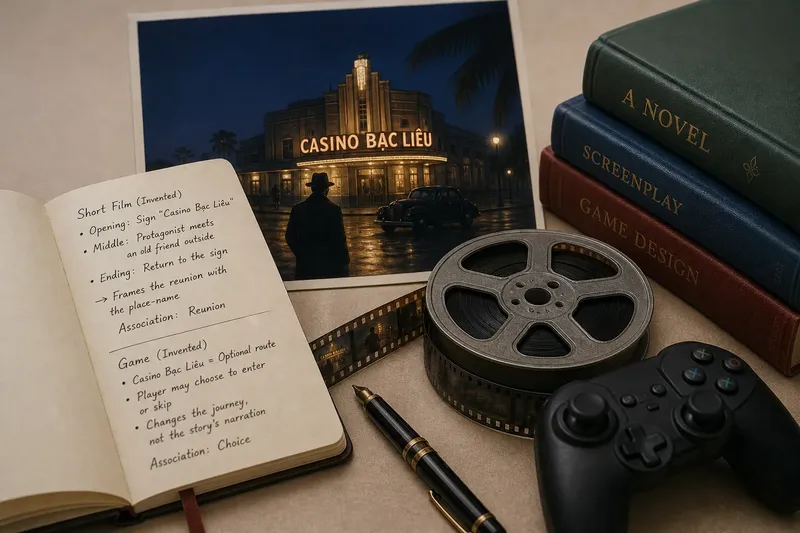
Casino Bạc Liêu in fiction can shape a public image when stories, films or games return to its name and give it a recognisable role. To understand that image, trace both what each work depicts and how later works or public discussion reuse the association.
A fictional scene is evidence of a creator’s choices, not a record of the venue or a measure of what audiences believe. The wider image emerges only as a pattern across identifiable works and responses, so keep those sources distinct.
How does Casino Bạc Liêu become a recurring image?
A place-name becomes memorable when a work connects it with an action, character or mood. A novel might make the venue a point of arrival; a film might return to its sign at a turning point; a game might make approaching it a choice that changes the route.
Look for what repeats and what changes. If several works use the venue as a meeting place, that is a pattern in those works. It does not, by itself, establish a shared local meaning or a universal audience response.
What can fiction, film and games each contribute?
Prose can state a character’s thoughts, while film can use framing, light, sound and editing to give a location prominence. Games add player action: a venue might be a place to enter, pass by or revisit, depending on the choices the game offers.
These differences matter when describing the image a work creates. Name the technique first, then explain its effect within that work; do not treat a game’s playable location as equivalent to a narrator’s description or a film’s establishing shot.
How can you trace a public image without overclaiming?
- Check the name. If the work explicitly identifies Casino Bạc Liêu, record the wording; if it names no venue, do not assign the scene to this one.
- Note the medium’s choices. If a film foregrounds a sign or sound, describe that choice; if a game offers a route, describe the player’s available action instead.
- Track recurring details. If an image or phrase returns, note where and how it changes; if it does not recur, avoid calling it a sustained motif.
- Identify the character’s stated purpose. If dialogue explains why someone visits, report that motive; if the purpose is unstated, leave it unresolved.
- Compare specific works. If several named works use a similar image, describe that limited pattern; if you have one work, present it as an individual choice.
- Separate fictional portrayals from public responses. If you have identifiable reviews, interviews or audience comments, describe whose responses they are; if you have only the work, make no claim about public reception.
Say you are analysing an invented short film. It begins with a sign reading “Casino Bạc Liêu”, shows a protagonist pausing outside before meeting an old friend, and ends by returning to the sign. First, record those three details; then note that the opening and ending frame the meeting with the place-name; finally, describe the film’s association as a reunion. If you compare it with an invented game that uses the name for a route the player may take or skip, the resulting distinction is clear: the film frames a meeting, while the game makes the location a choice. Neither example establishes what real audiences think.
What questions help explain Casino Bạc Liêu’s fictional image?
Can one story establish what audiences think of the venue?
No. One story shows how that work presents the place, not how every viewer understands it. Claims about reception need identifiable audience responses, described within their actual scope.
Why might a creator use a real place-name?
A recognisable name can make a scene feel located or connect it to a character’s background. Look to dialogue, plot and visual or interactive choices for clues; the work may leave the creator’s reason unstated.
What makes a recurring image meaningful?
Repetition can connect a place with a character, mood or turning point inside a work. Note where the image returns and what changes around it, while leaving the association open if the story does.
How can several works shape a public image?
Compare their specific choices: repeated settings, plot roles, visual motifs or interactive uses can form a pattern across the works. Call it a pattern in the works you can name, and distinguish it from audience opinion unless you also have evidence of that response.
How should you write about the venue’s place in a story?
Build the account from observable details: a line of dialogue, a repeated image, a character’s action or a game’s route. Then explain what those details suggest in that particular work and, where relevant, compare them with other identified portrayals.
Casino Bạc Liêu in fiction becomes part of public imagination through the circulation and reuse of particular portrayals, not through a single scene alone. Keep track of which work supplies each image and which sources document responses; that distinction lets readers see where interpretation ends and evidence about reception begins.