Writing Casino Bạc Liêu Beyond the Glitter
Writing Casino Bạc Liêu scenes with care helps you turn a venue into a clear story engine while separating invented details from claims about Bạc Liêu.
Writing Casino Bạc Liêu scenes works best when the venue changes a character’s choices, not when it serves as a stand-in for local life. Give the place a specific job in the story, then make that job visible through what characters do and what the audience can see.
What does Casino Bạc Liêu do in the scene?
Choose a dramatic function before adding details. The venue might keep two people in public view, give a character a reason to delay a meeting, or make an otherwise private exchange difficult.
Keep the focus on this scene’s people rather than assigning a shared attitude to Bạc Liêu. A character may want to be noticed; another may want to pass unseen. Their conflicting aims create the scene’s movement.
How can the setting change a character’s next move?
Link each feature of the fictional venue to an action. A narrow entrance could make someone pause; music might force a character to move closer to be heard; a visible doorway could prompt someone to end a conversation.
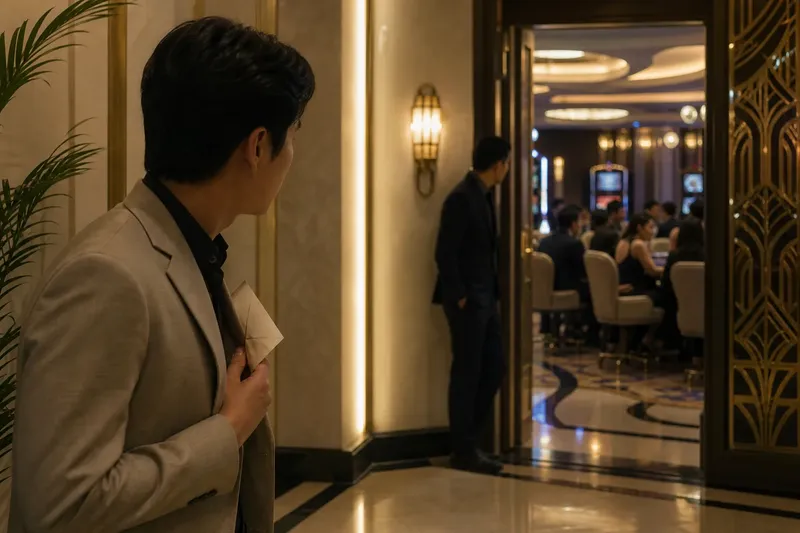
Imagine a fictional casino with a single entrance to its meeting room. A character arrives carrying a folded note, sees an estranged friend beside the doorway, and puts the note away rather than approaching. The visible result is that the friend leaves before the message is delivered; the scene’s tension comes from the choice, not from a claim about real venues.
How should you separate Bạc Liêu from invention?
Readers may mistake a named place for a factual account. Decide whether Casino Bạc Liêu is an invented venue, a reference to a real business, or a fictional location inspired by the region, and make that distinction clear where it matters.
Keep invented décor, events and customs attached to the fictional venue. If the scene relies on a claim about Bạc Liêu, check a credible source; if you cannot establish the detail, remove it or present it plainly as invention. For culturally significant language or relationships, seek informed local feedback rather than using one detail as a shortcut to authenticity.
How does the venue work in prose, film and games?
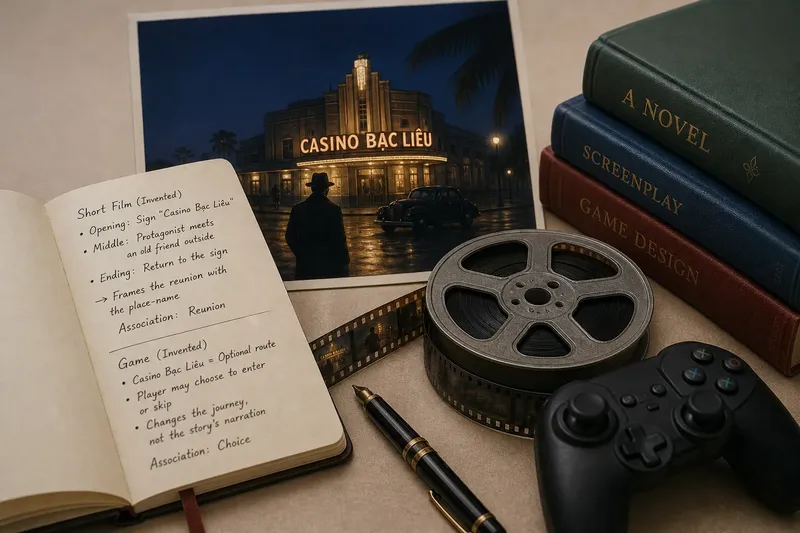
Prose can show a character’s private interpretation of a room. Film can reveal attention through framing, blocking or sound, while a game can make the player choose whom to approach or what to disclose.
Keep the central pressure when adapting, but use the medium’s own tools. A novel might name a character’s fear of being recognised; a film might show an avoided glance; a game might let the player decide whether to cross the room before a conversation ends.
What do writers ask about Casino Bạc Liêu scenes?
How do I signal that the venue is fictional?
State its invented status in the story or accompanying description if readers could mistake it for a real business. Do not present made-up history or customs as facts about Bạc Liêu.
How can a casino scene create tension without stereotypes?
Give the characters individual aims, such as keeping a meeting private or making sure a message is delivered. Let their actions create pressure instead of attributing a behaviour to a whole community.
What makes the venue matter in a game?
Give the player a choice whose outcome depends on the venue, such as approaching one character while another can see. If the same choice would work unchanged in any room, give the location a clearer effect or simplify it.
What should an adaptation preserve?
Preserve the scene’s central conflict rather than every decorative detail. Use interior thought, framing or consequential player choice to make the pressure legible in the new medium.
Which revision checks make the setting specific?
- Character’s reason for being there: If the reason changes a decision or relationship, keep it; if not, add a concrete aim or remove the character from the scene.
- Visibility and sound: If someone’s position lets another person see or hear them, show the resulting glance, interruption or changed route; if it changes nothing, simplify the staging or give it a consequence.
- Access to the conversation: If a character’s movement controls who can speak, make that movement clear; if everyone can speak without consequence, revise the interaction.
- Claims about Bạc Liêu: If a claim is supported and relevant, retain it; if not, remove it or identify it as fictional invention.
- Cultural references: If a term or custom has a clear, relevant context, work that context into the scene; if you cannot establish it, seek informed feedback or leave it out.
- Medium-specific tension: If prose, film or gameplay makes the pressure observable, keep that method; if it relies only on explanation, add an action, image or consequential player choice.
For a fully worked revision, imagine a fictional draft with two characters, one folded note and one doorway between the entrance and meeting room. First, make the setting’s role clear: the doorway is visible from the entrance. Next, have the arriving character see the former friend beside it and put the note away. Then let the friend leave before the note is delivered. The resulting scene shows a specific trade-off: avoiding an awkward approach costs the character the chance to pass on the message. If the draft instead needs the message delivered, the character must choose to cross the room or find another route.
When revising Writing Casino Bạc Liêu scenes, write the central pressure in one plain sentence, such as “the character hides the note to avoid an encounter”. Use that sentence to decide which details to keep, and let each retained detail support an observable choice rather than claim to represent the region.