How Casino Bạc Liêu Becomes a Screen Setting
Read Casino Bạc Liêu on screen through framing, sound and scene structure to see how a film or television setting shapes mood and character choices.
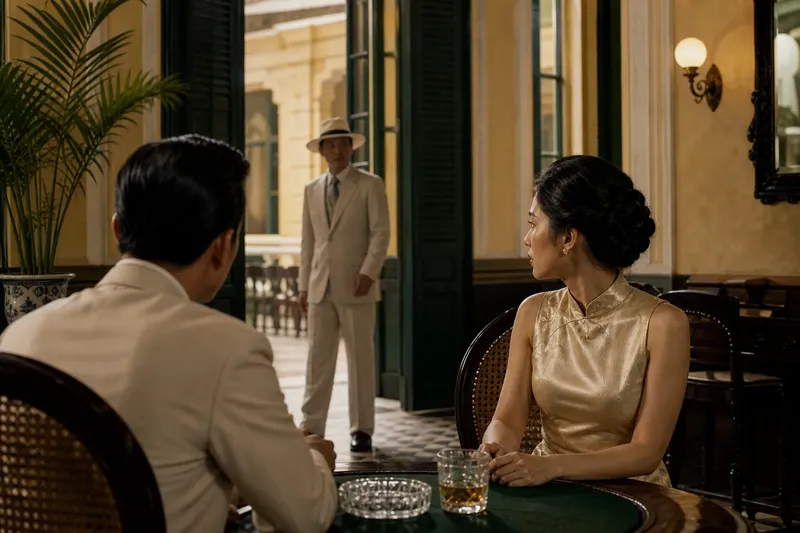
Casino Bạc Liêu on screen is most revealing when its rooms change what a character can do. Follow the route a character takes, the people who can see them and the moment the scene cuts away; those choices show how a production turns a named place into dramatic space.
What does framing make the audience notice?
A view from the doorway can make the room seem like a threshold, while a shot held close to a character’s face can shut out the surroundings. Neither image has a fixed meaning. Compare what the camera includes with what the character appears to notice.
Watch where people sit or stand in relation to one another. A table may separate two characters, or a corridor may keep one person visible while another moves out of sight. These arrangements can make a conversation feel public, guarded or unequal without explaining that feeling in dialogue.
How does the scene use sound and silence?
Listen for changes between dialogue, music, room noise and silence. A sudden quiet after a character speaks may make the line feel exposed; steady background sound may leave the audience focused on faces and gestures instead.
Ask whether the sound seems tied to the place, filtered through a character’s attention, or added to steer the audience’s response. A scene can make the room feel vivid through sound, but that is a storytelling choice rather than evidence about the actual location.
When does the setting alter a character’s options?
Look for a choice that depends on the scene’s arrangement: a character waits for a clear exit, lowers their voice because others are nearby, or changes course when someone enters. The useful question is not whether the location looks grand, but whether its social or physical layout changes the action.
Say you are reading an invented scene that begins with two characters seated at a table near a visible doorway. One character starts to disclose a secret, then stops when a third person appears in the doorway; the first character changes the subject, and the second follows their gaze. The observable result is that the entrance interrupts the disclosure, so the room’s arrangement creates a reason for the conversation to shift. That interpretation concerns the scene as written or filmed, not the real Casino Bạc Liêu.
How do film and television give a place different roles?
A film may use one visit as a concentrated turning point: an arrival, a tense exchange and a departure can form a complete dramatic passage. Notice whether the scene’s images develop across that passage or simply establish a striking backdrop.
A television story can revisit a location and change its meaning through new relationships or altered blocking. If a return uses the same camera position but a different character occupies the doorway, compare what that person can see and how the others respond.
These are possibilities, not rules. A single film scene can leave a location open-ended, while one television visit can carry the main dramatic turn.
How can you analyse a Casino Bạc Liêu screen scene?
- Opening view: Check whether the first image identifies the room or focuses on a person or object. If the location is clear, note what that first view invites you to expect; if it is not, wait for dialogue, signage or later context before naming the place.
- Camera distance: Observe whether wide views or close shots dominate. If wide views recur, consider how the characters relate to the space; if close shots dominate, examine gesture and reaction before claiming the room itself drives the scene.
- Movement: Track who enters, leaves or changes position. If movement affects who can see or speak to whom, connect it to the exchange; if people remain still, examine framing or performance instead.
- Sound: Listen for music, room noise, silence and dialogue. If one changes at a turning point, describe how it shapes that moment; if the sound remains steady, look for the source of tension in the image or acting.
- Access to information: Check whose face, reaction or line of sight the scene follows. If one character receives most of the attention, limit your interpretation to what that character can know; if attention shifts, compare what each person sees or misses.
- Scene consequence: Identify what changes before the scene ends. If a choice, relationship or piece of information shifts, explain how the setting contributes; if nothing changes, describe the location as atmosphere rather than claiming it drives the plot.
What questions help you read Casino Bạc Liêu on screen?
Why does a scene begin with an empty room?
An empty view can prepare the audience to notice a character’s arrival or make the space feel separate from the people in it. Check whether the next shot confirms that expectation or redirects attention elsewhere.
Can sound make the same room feel different?
Yes: silence, music and background noise can alter how an image feels without changing what appears in it. Compare the sound around a character’s action and describe the effect without treating it as a factual record of the venue.
When does a location matter to the plot?
It matters when the scene’s layout, visibility or social situation shapes a character’s options. If the same conflict would unfold unchanged in another room, the location may be serving chiefly as atmosphere.
How can you distinguish a named place from a fictional setting?
Look for explicit cues such as dialogue, titles or visible signs, then separate those cues from what the scene merely suggests. A production can use a name while altering the space, so screen details alone do not establish the real location’s appearance or history.
How can you compare two portrayals without treating them as evidence?
Choose one shared feature, such as the opening view, a character’s route or a change in sound. Note what each scene shows, then explain how the difference shifts attention or character behaviour; keep claims about the real place separate from interpretations of the work.
Imagine two invented dramas that both identify their setting in dialogue as Casino Bạc Liêu. In the first, the opening shot holds on an empty entrance before one character walks in; in the second, close views follow two people speaking while the background sound stays steady. Record the starting choices, then compare their observable effects: the first directs attention to arrival, while the second keeps attention on the exchange. The comparison describes two imagined scenes, not the actual venue.
For a useful reading of Casino Bạc Liêu on screen, link each claim to a visible, audible or structural choice. When a question concerns the real place rather than a production’s version of it, check appropriate local and cultural sources separately.