Reading Casino Bạc Liêu in Games, Fiction and Film
Read Casino Bạc Liêu in games, fiction and film by tracking who controls access, how the venue shapes a scene, and what the work leaves unresolved.
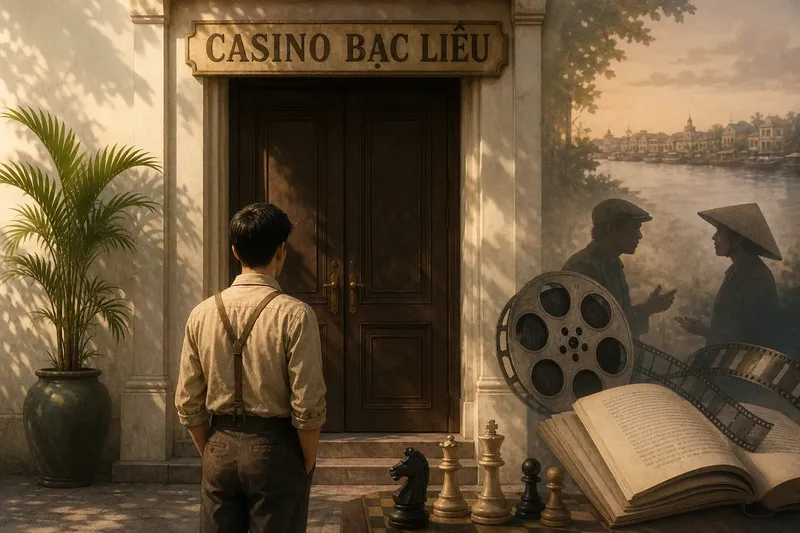
A locked door can make Casino Bạc Liêu matter in a game before the player sees what lies beyond it. The venue’s role comes from the scene’s specific choices and consequences, not from assuming that a casino automatically represents wealth, risk or local life.
What does the player actually control?
Start with the actions the game offers: entering, turning away, asking a question or selecting a line of dialogue. Record who performs each action—the player, the character or a non-player character—because those roles are not interchangeable.
Then look at what follows. A choice might open a route, change a conversation or leave the next scene untouched. Describe the visible consequence, rather than claiming that a player or character has a motive the game does not show.
What does Casino Bạc Liêu do in the plot?
Follow the venue’s effect on the story. It may provide a meeting place, prompt a decision, serve as the subject of a conversation or appear only in passing. Those functions are more precise than calling the casino a symbol before the work has connected it to a larger pattern.
Pay attention to who supplies information about the place. A character’s account may be personal, uncertain or second-hand; narration may confirm, complicate or leave it alone. Keep the source attached to the claim, so a character’s remark does not quietly become a statement of fact about Bạc Liêu.
For cultural context, distinguish what the work depicts from what it establishes. A scene with no local voices may be read as a narrow presentation of place, but that absence cannot tell you what residents think or what the region is like.
How should you read a Casino Bạc Liêu scene?
- Identification: If dialogue or narration names Casino Bạc Liêu, discuss that named venue; if the work shows only a generic casino, describe it as a casino and do not assign it a specific identity.
- Access: If the player can enter, leave or choose a conversation, identify the available action; if the scene is fixed, describe the player’s role as observing rather than deciding.
- Point of view: If one character describes the venue, attribute the account to that character; if the viewpoint shifts, name the new source before comparing what each account says.
- Local voices: If the scene includes a named local speaker, explain what that person contributes to this encounter; if no such voice appears, limit the claim to the scene’s presentation.
- Recurring details: If an image, sound or phrase returns and changes its meaning, discuss that development; if it appears once, treat it as a single detail rather than a pattern.
- Plot consequence: If a choice at the venue alters what happens next, describe the change; if the plot continues unchanged, do not claim the location drives the story.
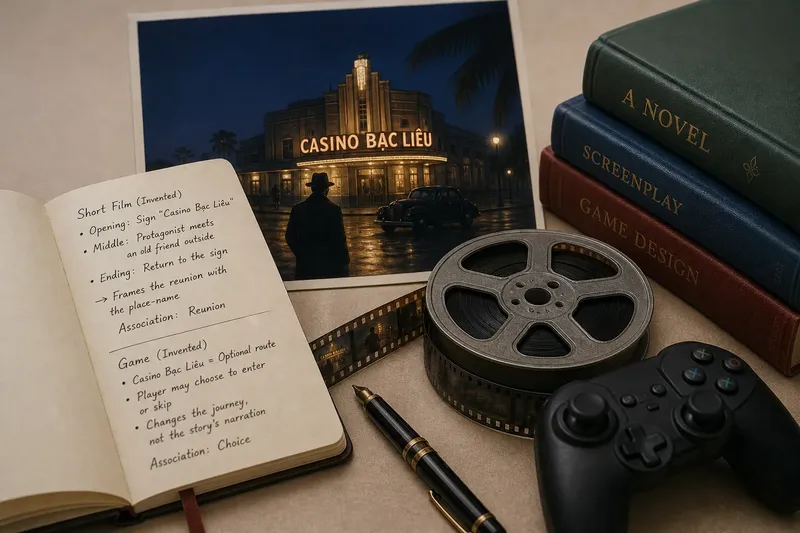
Say you are reading an invented game in which the character stands outside a room marked “Casino Bạc Liêu”. The player has two options: enter the room or ask a neighbour about the street; the neighbour replies, “I don’t know”, and either choice leads to the same next scene. You can therefore state that the game identifies the venue and offers an entry choice, while the unchanged plot and unanswered question leave its local connection unresolved.
What changes between games, novels and films?
In a game, map the available actions and barriers. An optional conversation can make information missable, while a fixed sequence leaves the player as an observer; neither feature, by itself, explains what the character believes.
In a novel, track access to thought and the timing of description. In a film, attend to framing, sound and editing: a shot can direct attention, while a cut can withhold what happens next. For a comparison, choose one shared question—such as who may enter—and show how each medium answers it through its own form.
What questions help you read Casino Bạc Liêu?
How can I tell whether the venue is specifically identified?
Look for the name in dialogue, narration or an unmistakable on-screen detail. If the work supplies only a generic casino setting, describe the visible evidence and leave the venue’s identity open.
When does the casino become a symbol?
Look for a meaningful link between the venue and repeated choices, relationships or changes in the story. If it appears once without that connection, describe its immediate plot function instead of assigning it a symbolic meaning.
How can I discuss local context responsibly?
Separate details supplied by the work from information supplied by a reliable account of the place. If the scene gives little context, say what it leaves out; do not use fiction alone to make claims about Bạc Liêu or its residents.
What makes a comparison across media useful?
Keep one question constant, such as who controls entry, and identify the evidence in each work. Compare a player’s available action with a novel’s narration or a film’s framing without treating their effects as identical.
How can you turn close reading of Casino Bạc Liêu into a clear claim?
Use one observable detail, its effect on the scene and a boundary on what you can infer. In the invented game above, the detail is the choice to enter or ask the neighbour; the effect is that entry remains available while the conversation yields no information; the boundary is that neither outcome explains the venue’s relationship to the neighbourhood.
For a real work, replace each invented detail with a moment you can point to, then ask whether it supports the wording of your claim. Reading Casino Bạc Liêu closely means showing how a particular scene directs attention—and naming the questions it leaves open.